Nori Recipes
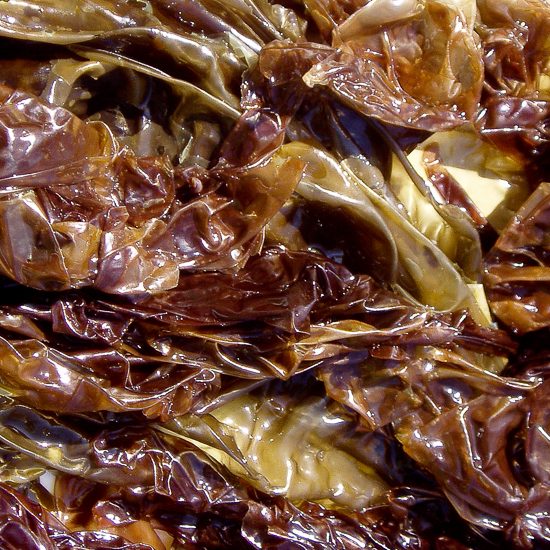
Nori is 35% protein. Chew on a piece of nori and there will be aftertastes in your mouth that link it to proteins like fish, chicken gristle, or your own fresh blood when you accidentally cut your finger and suck it. In other words, nori is related to the fascial support system of your body, and it nourishes it. Wild fresh nori is rubbery, elastic, and flexible---like healthy connective tissue. Whenever I have a sprained joint or a wound to heal, I get hungry for nori.
Aquaculturists who grow nori tuck their nets away in quiet water, and this inevitably leads to pollution from the buildup of petrochemicals floating on the surface of the water, the result of too much boat traffic. There's simply not enough tidal flush and flow in aquacultural settings to grow the same level of purity and quality as wild nori. Once you've tasted wild nori......nori that hasn't been tampered with...... you won't go back to using aquacultured nori that has been chopped up and made into paper through a heat process, then stored in the package for months before coming to market.
(macro version, thanks to John, Barbara, Karen)
1 c dried nori
1 c whole wheat pastry flour
1 tsp baking powder
1/4 tsp sea salt
Pinch cayenne (or to taste) OR substitute cumin powder or fresh grated ginger
1 tsp kuzu dissolved in 3 Tbsp cold water
1/2 c water or soy milk
1-2 tsp shoyu
1 onion
Approximately 1 c safflower oil for deep-frying
Combine flour, baking powder, sea salt & cayenne. Add dissolved kuzu, shoyu, and enough soy milk or water to make a batter like that for pancakes. Break nori into small pieces and stir into batter. Allow nori to absorb moisture while you cut and add the onion. Batter starts like thin pancake batter and evolves into a gooey mass. Don't panic! To fry, pick out small amounts with chopsticks, fork or fingers. Deep fry 2-3 pieces at a time until golden brown and crisp on both sides. Drain and serve immediately as appetizers (serves 8) or as a main dish with rice (serves 4).
Tempura Dip
1/4-1/2 c shoyu
2 cloves garlic (optional)
1 tsp grated ginger
2 Tbsp rice syrup
Water
Crush and sauté garlic and ginger in oil about 30 seconds. Add rice syrup and shoyu. Add water to desired consistency and simmer about 5 minutes.
Roast nori in an oven at 200° and break up with your hands, a suribachi, a blender, or a flour mill. Beat approximately 2 1/2 cups water into 1 cup wholewheat pastry flour in a mixing bowl to form a very thin batter. Add a pinch of sea salt and 1/3 cup nori flakes. Mix again, and set aside for thirty minutes. Brush a small amount of refined sesame oil on a flat frying pan or crepe pan. Heat pan and pour on a small amount of the batter to evenly cover the surface, tilting the pan to form a round shape. Cook one side of the crepe then flip over and briefly cook the other side. Remove the crepe, put on a large plate and cover with a cloth to keep soft. Repeat the process.
To fill crepes, spread 2 tablespoons of filling across each crepe, roll and serve. Filling: combine 1 cup grated carrot, 2 tablespoons natural mustard, 1 teaspoon tamari, 1 tablespoon water, and mix well.
Nori may be cooked with vegetable dishes. Make lentil soup with nori, using onions, garlic, carrots, celery, parsley, sage, and bay leaf. Start with the nori and herbs in water first. Add lentils and chopped vegetables. Cook until nori and lentils are tender. Add tamari to taste. Enjoy!
Oven roast 1 cup nori at 200° until very crunchy and crumble it up. Heat 2 tablespoons refined sesame oil in a skillet and sauté one cup scallions or onions for 2-3 minutes. Add nori and one cup matchstick carrots. Sauté 5 minutes. Add two cups cooked rice, one tablespoon minced ginger. Cook on a low heat until warm throughout. Season with tamari and add 1/2 cup roasted, sliced hazelnuts.