Digitata Recipes
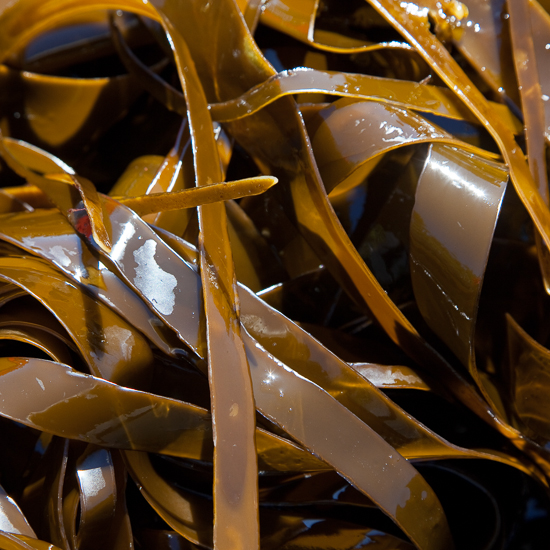
Digitata kelp grows in the most turbulent surf conditions, just below the alaria zone. Even on a flat calm day, there is movement in a digitata bed. Harvesting digitata kelp from a low-sided boat is a bit like playing rodeo. Grab the plant below the many-bladed frond (just hold up your hand and imagine your hand is the frond and the short stipe is attached at your wrist) and hang on tight! while you saw away at the stipe with a serrated frozen food knife wrapped and bound with old wetsuit material so it's easy to grab and will float. Sometimes I feel my shoulder tugged in its socket, just like the cowboy hanging on to the lasso, roping calves. In my case, I have to watch out for breaking waves that can sink my boat. I'm playing at the edge of breakers, all the time. When the little eight foot boat is full (about eight bushels), I row back to the container boat and transfer the load. On a good new moon tide (a tide that goes out a foot lower than average low water), I will manage to do this five or six times.
Because digitata grows in such turbulence, it is not damaged by snails. As the summer goes on, digitata becomes sweet with mannitol sugar, and sometimes this sugar comes to surface as the plants dry. Not many plants can remain sweet without succumbing to pests. I admire digitata kelp for maintaining its own gentle sweet nature in a world of turbulence. May we all be so.
If I had to choose one variety of kelp for my kitchen, I would choose digitata kelp. This may be substituted into any recipe calling for kombu, for digitata's cooking qualities are much the same. Reconstituted and cooked for fifteen minutes, digitata behaves like a vegetable and becomes softer. Cooked for an hour or more, digitata dissolves and creates a delicious creamy soup stock that the Japanese would call dashi. Just add ginger and tamari. The alginates that are released from the digitata through long cooking are able to bind (chelate) with the large molecules of heavy metals and radioactive isotopes and remove them from the body. Moreover, digitata contains iodine which nourishes and protects the thyroid so that it will not absorb radioactive iodine. My skin always gets softer when I handle digitata which is oozing with slippery alginates. Its softening effects on the body are obvious.
When I make soup with digitata kelp, I start by filling the soup pot half full of water, turning up the heat, and adding barley, a slice of fresh ginger root, and a few square inches of digitata, cut into small pieces. I add dried shiitake mushrooms. After they rehydrate, I take them out and cut them into small pieces, then throw them back in the pot. I sauté a diced onion with plenty of thyme in refined sesame oil, and I set that aside. I slice root crops like carrots, parsnips, rutabaga, beets, and turnips. When the barley is beginning to soften, I add the roots, and I turn my attention to cutting up greens: celery, kale, and parsley are always good candidates. When the barley and roots are almost done to perfection, I add the greens and the sautéed onions for about three minutes and cover the pot. I salt to taste with Eden brand shoyu soy sauce because it doesn't contain alcohol preservative, far as I can tell. This soup improves on the second day, and I usually add more parsley or scallions each time that I heat it up. It just keeps getting greener and richer.
Soak 1 cup of beans overnight with a 2" x 3" piece of digitata. Pressure cook 1 hour or simmer all day, adding seasonal vegetables when the beans are soft. Try burdock, carrots, celeriac, shiitake mushrooms, onions, celery, parsley, summer savory. Season with sea salt, miso, or tamari.
1 Tbsp light sesame oil
6" piece digitata, soaked and cut into thin strips
Pinch cayenne pepper
Shoyu
Mirin
1 small leek, thinly sliced on diagonal
1/2 c daikon, sliced in fine matchsticks
1/2 c carrot, sliced in fine matchsticks
1/2 c rounds of thinly sliced lotus root
Juice of 1/2 lemon
1-2 sprigs parsley, minced
Heat oil in deep skillet. Stir in digitata and cayenne pepper. Add generous splashes of shoyu and mirin. Sauté 2-3 minutes. Stir in leek with a dash of shoyu and sauté 2 minutes. Stir in root vegetables and season lightly with shoyu. Stir-fry until carrots are crisp-tender (3-4 minutes). Remove from heat. Stir in lemon juice and parsley.