Over the years we’ve come up with yummy recipes that include seaweeds for making soups, salads, beans, vegetables, chowders, crepes, pickles, tempura, stir-fries, dumplings and desserts! Click on each recipe title below to reveal it’s recipe.
Alaria
Alaria Preparation and Basics
In the kitchen, the quick way to cut dry alaria is with a scissors. You can also soak alaria, then use a knife to cut it. Since alaria expands as it rehydrates, the second method of cutting alaria (after it has rehydrated, with a knife) will give you more control over the size of your final pieces. Don’t throw away the soaking water! This water contains minerals. For instance, alaria is high in calcium. It’s comparable to whole sesame seeds as far as calcium content (1,100 mg/100 g) and has high vitamin A content (8487 IU/100 g) similar to parsley and spinach. It’s a wise choice for nourishing your bones. It’s rich in B complex vitamins, vitamin C & K. It has moderate iodine, good for everyone, especially those with type A or B blood. Use the soak water for cooking. Pre-soaking alaria is a way of tenderizing it. Pre-soak alaria for at least an hour, until the midrib is thoroughly rehydrated.
Total cooking time for alaria (slow boil/fast simmer) needs to be at least 20-40 minutes. Remember that this isn’t like Japanese wakame which is often parboiled before drying to make it tender (and also results in the loss of minerals!). After 20-40 minutes of simmering, add sliced vegetables. The simplest combination would be one part alaria to four parts carrots. Cook until the carrots are tender. Add tamari to taste. Sometimes I throw in a couple of cloves, and it seems to work. Another simple combination is one part alaria, four parts green beans and a handful of almonds or sliced almonds, cooked until the beans are tender. Add a dash of tamari and a sprig of parsley. Another way to handle this dish would be to simmer the alaria until tender, place the green beans in boiling water for two minutes, drain and run under cold water to retain crispness and color, and then sauté the green beans in a cast-iron skillet on medium-high heat for three minutes (use refined sesame oil), add alaria and continue to sauté for three to four minutes. Remove from heat and season with tamari and add tamari-roasted almonds or sliced almonds. Pecans will work, too. Serve hot or cold.
Alaria is delicious when cooked with rice, barley, or millet. Cooked with beans (adukis, lentils, pintos, etc.), alaria will impart a rich “gravy” texture and help make the beans more digestible.
Alaria with Vegetables and Pasta
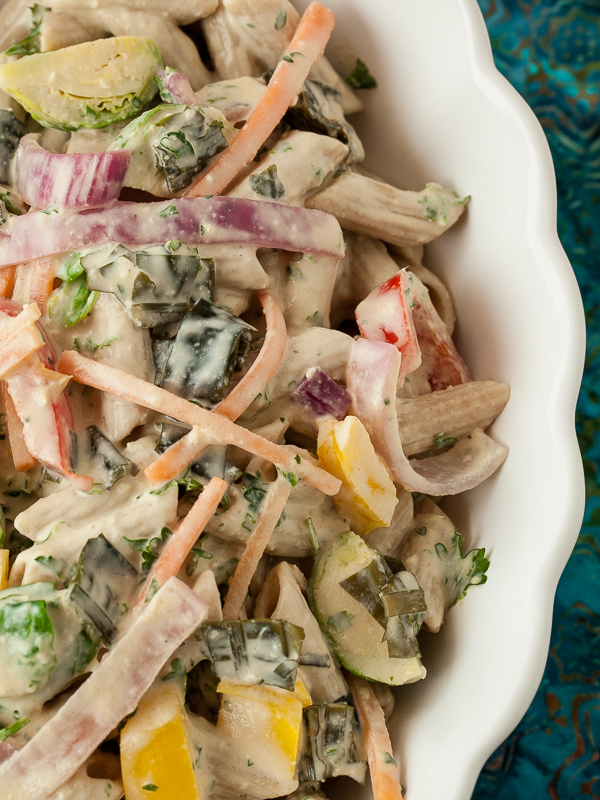
- 6 6" strips alaria
- 1/2 cup Tahini
- 1-2 cloves garlic
- 1/2 inch ginger fresh and peeled
- 1 tbsp miso or tamari
- 2 carrots sliced into rounds or matchsticks
- 1/2 cup red or yellow bell peppers (or mix of both)
- 10-15 snow peas cut into diagonal strips
- 1/2 cup cauliflower florets
- 1/2 cup broccoli florets
- 4 oz whole wheat linguine or fettuccine pasta
- Snip the alaria into one inch strips directly into a small saucepan. Add enough water to cover. Simmer for 20-30 minutes until tender.
- Drain and save the cooking water. Set alaria aside.
- Combine in a blender: 1/2 cup tahini with lemon juice to taste, fresh herbs like thyme and basil and oregano, a clove or two of garlic, soak water from Alaria.
- Set aside.
- You may use any of your favorite vegetables. Blanch sliced vegetables in boiling water, looking for an intensification of color, immediately removing them to cold water and drain.
- Bring the blanching water back to a boil and cook pasta according to package directions until al dente. Drain, saving one cup cooking water. Put the pasta back in the pot and stir in a tablespoon of olive oil.
- Add the vegetables and Alaria to the pasta and stir in the sauce, combining gently. Add a few tablespoons of saved cooking water if desired.
- Reheat the mixture briefly and serve garnished with parsley and fresh herbs.
Sautéed Alaria with Vegetables
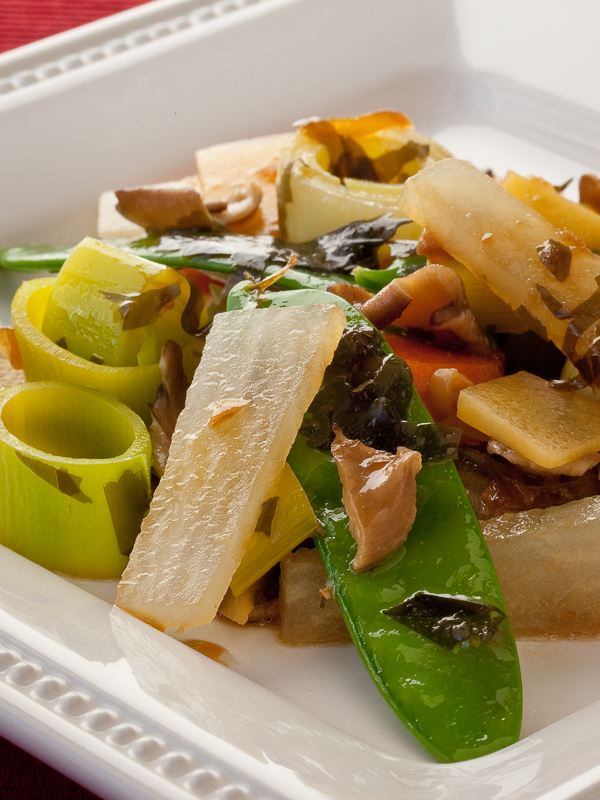
- 2 tbsp oil (refined sesame or olive)
- 2 tbsp tamari
- 1 tbsp rice syrup (or less to taste)
- 1 tsp ginger grated
- 1/2 medium onion finely diced
- 1-2 cloves garlic minced (optional)
- 1/4 cup maitake mushrooms soaked, 20 minutes
- 1/2 cup (1/4 oz. dry) Alaria soaked, 20 minutes and sliced into small pieces
- 1-2 cups vegetables finely sliced (green beans, leeks, cauliflower, carrots, etc.)
- 1 tsp ginger grated
- Heat skillet and add oil, tamari, rice syrup & ginger. Simmer 30 seconds, then add onion and garlic (if using). Sauté 1-2 minutes.
- Add Alaria and sauté until well coated.
- Add water just to cover and simmer 15-20 minutes. Peek at the simmering Alaria every five minutes and add more water if needed to prevent sticking or burning.
- Add vegetables, sauté briefly, cover and steam until vegetables are bright and crispy tender.
Lemon-Ginger Alaria Salad

- 3/4 cup alaria, soaked and sliced
- 1 medium carrot grated or sliced in very fine matchsticks
- 1/2 red onion sliced in thin half-moons
- 1/2 cup cucumber diced
- 1/2 cup celery cut in ¼ in slices
- 1-2 scallions sliced thinly on the diagonal
- 1 pear cut in ½ in chunks
- 1/4 cup walnuts coarsely chopped
- 1 inch piece of fresh ginger grated and juice extracted
- juice of 1 lemon
- 1/4 cup brown rice vinegar
- 1 tsp umeboshi vinegar (optional)
- 1 tbsp rice syrup or honey
- 1/4 cup olive or sesame oil
- Whisk together dressing ingredients. Set aside.
- Combine salad ingredients, except for walnuts, chopping and adding pear last to prevent it from turning brown.
- Add enough dressing to lightly coat salad ingredients and toss gently. (Extra dressing may be refrigerated to use on other salads.)
- Allow salad to marinate 15-20 minutes. Sprinkle walnuts over top before serving.
Cucumber-Alaria Salad
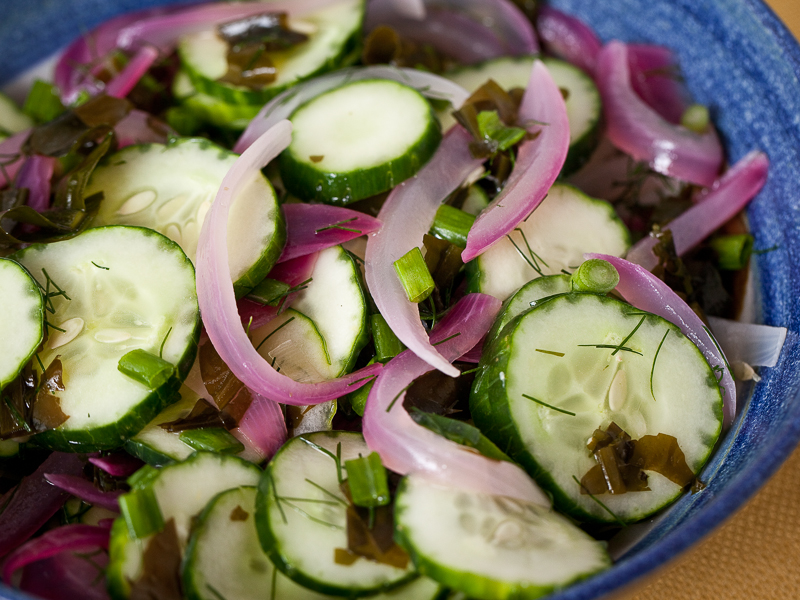
- 1 lb organic unwaxed cucumbers thinly sliced
- 1 tsp sea salt
- 1/2 large red onion sliced
- 2 tbsp lemon juice
- 1 tbsp sesame or olive oil 1 tsp
- 1 tsp rice vinegar
- 1 tsp honey
- few drops toasted sesame oil
- 1/4 cup re-hydrated Alaria chopped
- 1 tbsp fresh dill finely chopped
- 1 tbsp scallions chopped
- Thinly slice one pound of organic unwaxed cucumbers and sprinkle with one teaspoon of sea salt; set aside for thirty minutes.
- In a small bowl, combine the lemon juice, sesame or olive oil, rice vinegar and honey. Set aside.
- Peel and slice the onion. Lightly rinse the cucumbers, combine with the sliced red onion and alaria. Toss with the dressing. Garnish with chopped dill and scallions.
- Variation: substitute ½ cup finely sliced scallions for the red onion. Add half of a red or yellow sweet pepper, chopped fine. Mix with the rinsed cucumbers and alaria. Dress and garnish as above.
Kelp
Kelp Overview
The life of a kelp plant is about three years, spent in a tidal flow that reverses direction every six hours. Imagine being anchored by a holdfast, your hollow stipe gently lifting you toward the light, your wide blade/frond growing in the ocean’s inflow/outflow/inflow/outflow……and you’re one of the multitude that have been doing this since the beginning of Ocean here on this planet. Your life began when your tiny spore settled and attached to a rock. The first year you grew to a foot long, the second year, six feet long, and now, in your third year, you are one of the elders in a kelp bed, twelve feet long and exposed to turbulence on the surface at low tide. This is your last year, and you are releasing spores from the tip of your frond that will become the next generation of kelp. You are one of the Old Ones, a member of one of the oldest families of sea plants on earth, aligned with the flow of the universe…..and in the Light…..and there is no “I”……there is only the ancient All in One.
A Google search on seaweed will reveal that it is being studied for its positive effects on cancer prevention, cardiovascular health, degenerative disease combatant, detoxification, infection control, intestinal cleanser and healer, respiratory enhancer, sexual health and hormone support, thyroid balancer, weight-loss aid, and wound healer. For me, kelp is one of the great balancers of my body, and I use it daily.
Kelp Basics
Reconstitute kelp by cutting 4-5 inch lengths with a scissors and then soaking in warm water for 5 to 10 minutes. Then, to use as a vegetable, cut into strips or small squares and add to stir-fried vegetables, bean stews, soups, hot cooked grains, or simple noodle dishes flavored with miso or tamari. Kelp goes well with carrots, onions, parsnips, rutabaga, turnips, tofu, parsley, kale, cabbage, and other greens. Kelp may be used as a tenderizer for cooking beans, peas, and lentils. Kelp contains glutamic acid that softens the beans, making them more digestible. Simply add a 4 inch piece of kelp per pound of dried beans and cook until tender.
Kelp with Onion and Parsnip
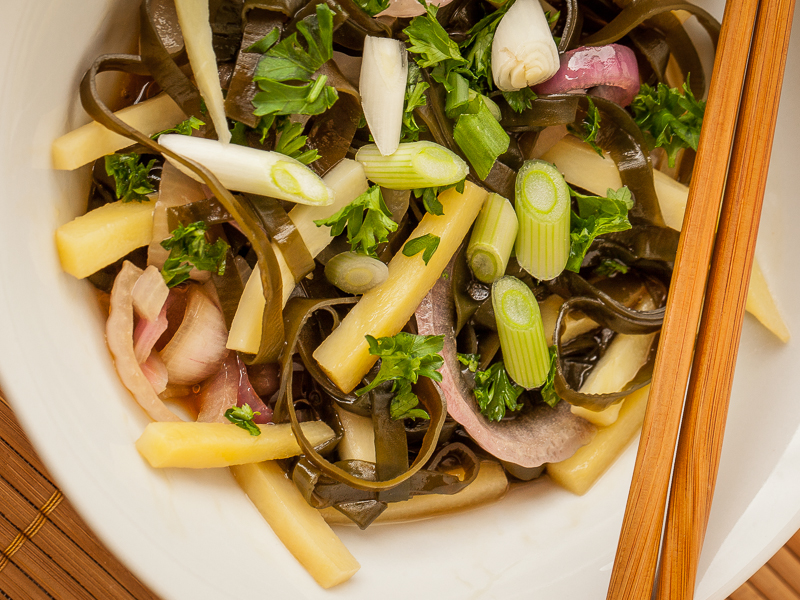
- 3-4 inch Kelp strips soaked and sliced into long thin strips
- 1 tsp sesame oil
- 1 large onion sliced into thin half moons
- 1-2 medium parsnips sliced into matchsticks
- tamari to taste
- Heat oil in large skillet with heavy lid. Add kelp and sauté 1-2 minutes. Add onion and sauté until limp.
- Add parsnips and stir until coated with oil.
- Cover vegetables halfway with water. Bring to boil, reduce heat and cover.
- Simmer 15-20 minutes until parsnips are soft but not mushy.
- Sprinkle with tamari and simmer 5-7 minutes more.
- Garnish with sliced scallions or a sprinkle of chopped cilantro.
Kelp with Rice

- 2 tbsp olive oil
- 1 small sweet onion chopped
- 1 carrot grated or chopped
- 3 cloves garlic minced
- Thyme to taste
- 1/2 cup Kelp (soaked) chopped
- 3 cups warm cooked brown rice
- sea salt to taste
- Cayenne or fresh grated ginger to taste
- 1 tbsp roasted sesame seeds
- Warm the oil in a large skillet over medium heat.
- Add the onion, carrot,and garlic.
- Sprinkle with thyme, cook for 5 minutes or until softened.
- Stir in the kelp and cook for 2 minutes.
- Add the cooked rice, stir in the ginger or cayenne, sprinkle with salt and sesame seeds. Serve hot.
Dulse
Dulse Basics
Freshly harvested and dried dulse is too tough for most people to chew. The secret of tender dulse is a bit like aging cheese. The dulse is spread out in the early morning hours to soak up a bit of humidity from the air, and then it is packed away tightly for a few weeks. This kicks off an enzyme process that breaks down the cell walls of the dulse, and the flavors slowly change.
Once dulse has been softened, it needs to be used within six months, unless it is kept refrigerated, in which case it can be kept for a year. Most people eat soft dulse as is or snip it onto salads and soups.
Dulse and Kale

- 1/2 cup Dulse
- Refined sesame oil
- 2 cloves garlic minced
- 8 cups kale chopped
- 1/3 cup tamari-roasted sunflower seeds
- Soak the dulse for 10 minutes in a bowl with water just to cover. Drain and reserve the soaking liquid.
- Mince two cloves garlic and sauté briefly in two tablespoons refined sesame oil. Add two quarts chopped kale and sauté until the color deepens. Add 1⁄2 cup soaked, drained, chopped Dulse and 1⁄3 cup tamari-roasted sunflower seeds. Add a few teaspoons of the dulse soaking liquid to the pan. Cover and steam about two minutes.
- A variation on the above recipe would add sautéed parsnips and/or onions in addition to the garlic.
- Heat 1⁄3 cup raw sunflower seeds in a cast iron frying pan over medium heat. Stir constantly until seeds give off a sweet, toasty smell and are lightly colored. Remove from heat. Sprinkle on a few dashes of tamari while stirring seeds. Scrape the hot seeds and tamari into a wooden bowl to cool. These are very good as a snack, too, so make extra!
DLT - Dulse, Lettuce and Tomato Sandwich
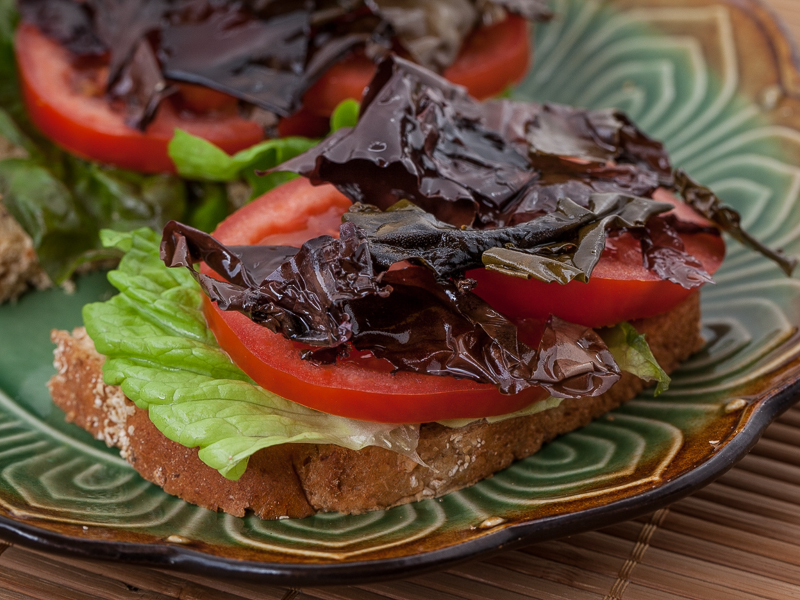
- Pan fry Dulse in refined sesame oil over medium heat, pressing down with a spatula and flipping frequently for about one minute. The dulse will become crisp, turn yellow/green, and smell like bacon.
- Remove from pan and pat oil off with paper towel. Color will return to deep red when the dulse cools.
- Spread mayo on toasted bread, add lettuce, crispy dulse, and tomato. A DLT!
Dulse Shredded Salad
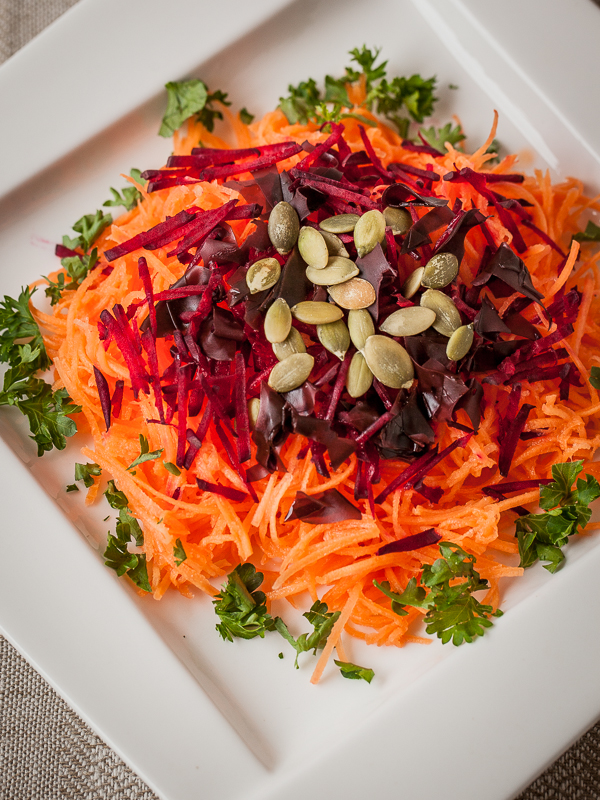
- 1 lb carrots
- 1 small beet peeled
- Juice of one lemon
- 1 inch piece of peeled ginger grated
- 2 tsp honey
- 3 tbsp Dulse snipped into small pieces
- 3 tbsp pumpkin seeds
- Chopped parsley for garnish
- Grate carrots into a large bowl. Toss with lemon juice, ginger and honey. Turn carrot mixture into a serving dish.
- Grate beet into a separate bowl and arrange it on top of carrots. Top with the snipped dulse and the toasted pumpkin seeds.
- Sprinkle the parsley around the edge for color.
Dulse Salad with Avocado and Tomato
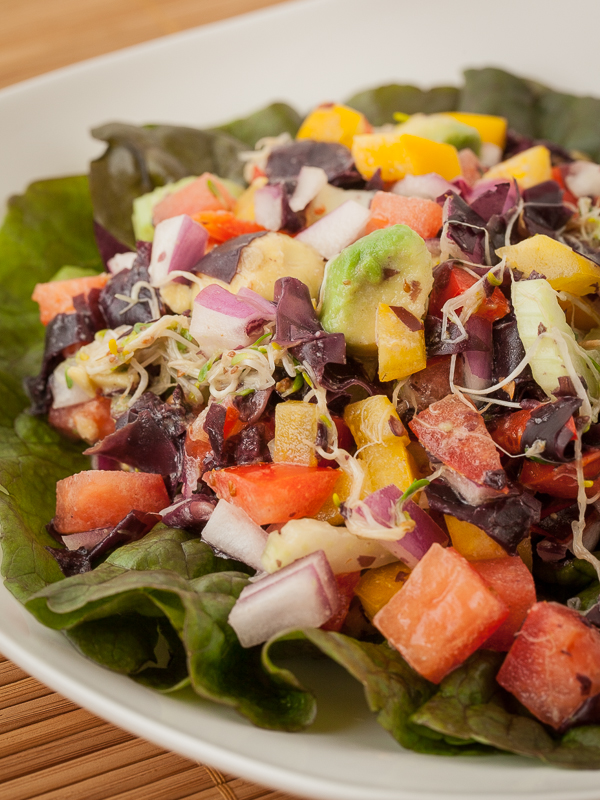
- 1 cup Dulse rinsed and cut into small pieces
- 2 cups alfalfa sprouts
- 1/2 cup red and yellow peppers sliced
- 1/2 cup scallions or red onion sliced
- 1 stalk celery sliced
- 1 avocado scooped with a melon ball tool
- 1 tomato cut into small wedges
- juice of one lemon
- 1 tbsp tahini
- 1 small clove garlic grated
- dash of salt
- In a small bowl, combine lemon juice, tahini, garlic, and salt. Beat well with a whisk or fork. Toss the vegetables with the dressing in a large bowl. Taste for seasoning.
- Serve on lettuce as a side salad or in a pita with lettuce for a light lunch.
Pear-Dulse Salad

- 2 pears (you can substitute apples)
- lemon juice
- 2 stalks celery diced
- 1 carrot grated
- 1/2 cup cup dry-roasted nuts or seeds (pecans, walnuts, hazelnuts, or sunflower seeds)
- 1/2 cup dry Dulse cut into small pieces
- 1-2 tbsp mayonnaise
- 1 tsp umeboshi vinegar (or brown rice vinegar and a dash of salt)
- Chop pears into ½" pieces. Toss with lemon juice to prevent browning. Add celery, carrots, nuts or seeds (chopped coarsely if desired) and dulse. Combine with mayonnaise and umeboshi vinegar to taste.
Digitata
Digitata Overview
Digitata kelp grows in the most turbulent surf conditions, just below the alaria zone. Even on a flat calm day, there is movement in a digitata bed. Harvesting digitata kelp from a low-sided boat is a bit like playing rodeo. Grab the plant below the many-bladed frond (just hold up your hand and imagine your hand is the frond and the short stipe is attached at your wrist) and hang on tight! while you saw away at the stipe with a serrated frozen food knife wrapped and bound with old wetsuit material so it’s easy to grab and will float. Sometimes I feel my shoulder tugged in its socket, just like the cowboy hanging on to the lasso, roping calves. In my case, I have to watch out for breaking waves that can sink my boat. I’m playing at the edge of breakers, all the time. When the little eight foot boat is full (about eight bushels), I row back to the container boat and transfer the load. On a good new moon tide (a tide that goes out a foot lower than average low water), I will manage to do this five or six times.
Because digitata grows in such turbulence, it is not damaged by snails. As the summer goes on, digitata becomes sweet with mannitol sugar, and sometimes this sugar comes to surface as the plants dry. Not many plants can remain sweet without succumbing to pests. I admire digitata kelp for maintaining its own gentle sweet nature in a world of turbulence. May we all be so.
Digitata Basics
If I had to choose one variety of kelp for my kitchen, I would choose digitata kelp. This may be substituted into any recipe calling for kombu, for digitata’s cooking qualities are much the same. Reconstituted and cooked for fifteen minutes, digitata behaves like a vegetable and becomes softer. Cooked for an hour or more, digitata dissolves and creates a delicious creamy soup stock that the Japanese would call dashi. Just add ginger and tamari. The alginates that are released from the digitata through long cooking are able to bind (chelate) with the large molecules of heavy metals and radioactive isotopes and remove them from the body. Moreover, digitata contains iodine which nourishes and protects the thyroid so that it will not absorb radioactive iodine. My skin always gets softer when I handle digitata which is oozing with slippery alginates. Its softening effects on the body are obvious.
Beans with Digitata and Vegetables
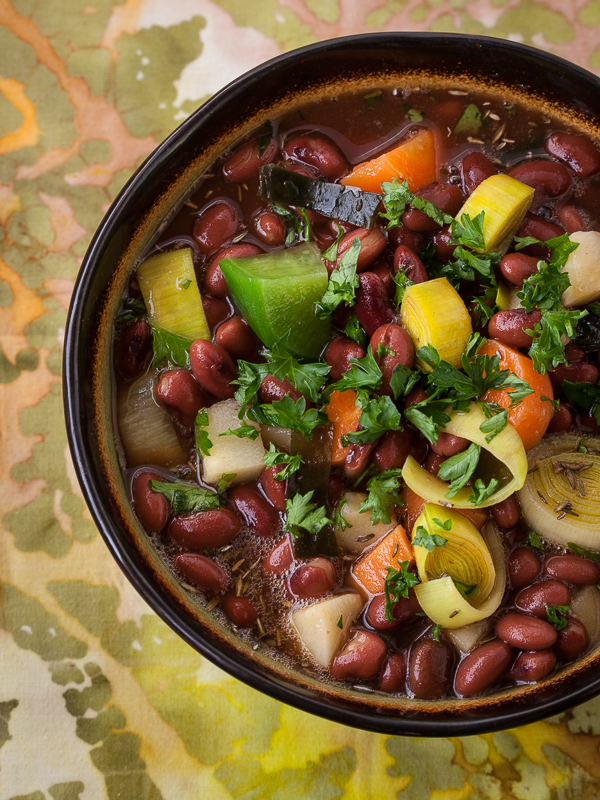
- 1 cup dry pinto, kidney, or Scarlet Runner beans
- 1 small whole onion
- 1 stalk celery
- 1 small carrot
- 1 large bay leaf
- 1/2 strip of Digitata kelp (6″)
- 1 tbsp olive oil
- 1 large leek cleaned and sliced into rounds
- 1 large cloves garlic sliced
- 2 carrots sliced into thick rounds
- 1 stalk celery sliced thick
- 1 medium parsnip sliced into thick half-moons
- 1 tsp dried Thyme savory or sage leaves or a combination of all three
- 2 cups kale cut into 2″ strips
- 1-2 tsp sea salt
- Black pepper to taste
- 2 tbsp parsley minced for garnish
- Sort beans into a strainer and rinse several times. Place beans in a large soup pot or cast-iron casserole with lid and add water to about 2 inches above the top of beans. Include with the beans the Digitata, the whole onion, stalk of celery, cut in half, carrot, cut in half, and bay leaf.
- Bring beans to a boil briefly. Remove from heat and cover. Let sit for at least 1 hour.
- After the beans have soaked, add more water to return the water level to 2 inches above the beans and bring all to a boil. Partially cover the pot and simmer for 2 hours or until a bean can be crushed easily with the back of a spoon. Check pot occasionally for water and add more if needed. If using a pressure cooker, seal lid, bring up to pressure, turn to low heat and cook 40 minutes.
- While beans are cooking, prepare vegetables. In a medium frying pan, sauté leeks and garlic in olive oil over low heat for 10 minutes. Stir frequently to avoid browning too much. When leeks are soft, add celery, carrot and parsnip to the pan and toss with leek mixture. Add herbs to the vegetable mixture and set aside until beans are cooked.
- When beans are tender, carefully remove and discard the onion, celery, carrot and bay leaf. Stir in the Digitata, which should be very soft and falling to pieces. Drain off all but about an inch of liquid from the beans and set aside. Add the sea salt and pepper to the beans and mix well. Transfer the vegetable mixture to the bean pot and stir in. Add kale and a little of the reserved cooking liquid if needed.
- Return the bean mixture to a simmer and cook, covered, for another 15 minutes until the vegetables are tender and the flavors have blended. Taste for salt. Garnish with minced parsley and serve with a salad and brown rice.
Digitata with Spicy Root Vegetables

- 1 tbsp light sesame oil
- 6 inch piece Digitata soaked and cut into thin strips
- pinch of cayenne pepper
- tamari
- Mirin white wine or dry sherry
- 1 small leek thinly sliced on diagonal
- 1/2 cup daikon sliced in fine matchsticks
- 1/2 cup carrots sliced in fine matchsticks
- 1/2 cup rounds of thinly sliced lotus root (if not available, use sliced small white turnip)
- juice of 1/2 lemon
- 1-2 sprigs parsley minced
- Heat oil in deep skillet. Stir in Digitata and cayenne pepper. Add generous splashes of tamari and mirin. Sauté 2-3 minutes.
- Stir in leek with a dash of tamari and sauté 2 minutes.
- Stir in root vegetables and season lightly with tamari. Stir-fry until carrots are crisp-tender (3-4 minutes).
- Remove from heat. Stir in lemon juice and parsley.
Nori
Nori Overview
Most of our customers enjoy our whole wild nori right out of the bag or toasted lightly in a 250º oven until very crisp, then eaten like chips. You can also crumble the toasted nori easily with your fingers onto any dish. To make nori flakes, put a larger amount of the toasted nori in a food processor and pulse until the flakes are the desired size. Store in an airtight jar in the refrigerator. Nori can also be soaked in a saucer of water for 15 minutes, then cut into small pieces on a cutting board with a sharp knife. Add the cut nori to stir-fries with garlic, ginger and tamari. A little nori makes a nice addition to miso vegetable soup.
Fried Rice with Nori
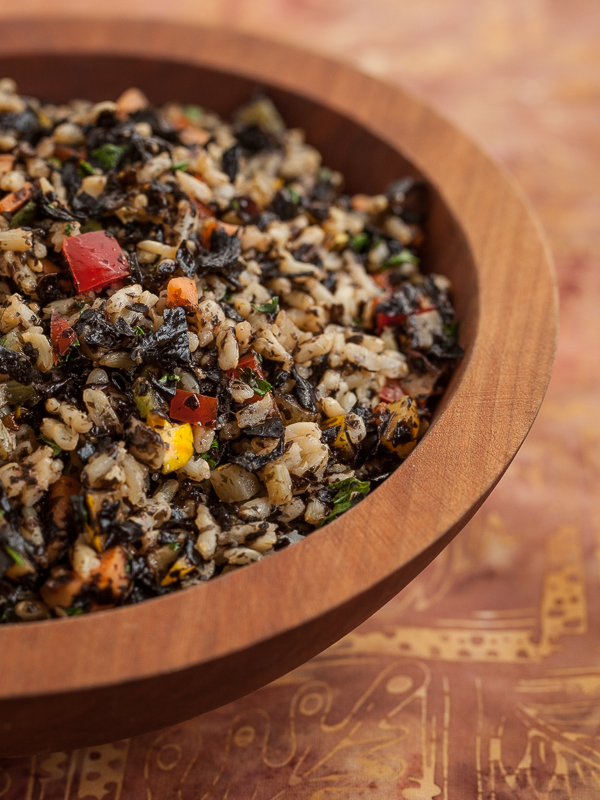
- 2 tbsp Refined sesame oil
- 2 tsp Thyme
- 1 cup onions diced
- 1/2 cup carrots cut into matchsticks
- 1 cup toasted nori (bake in 250o oven for 10 minutes)
- 1/2 cup celery diced
- 3 tbsp tamari
- 2 cups cooked brown rice
- 3-4 tsp juice from freshly grated ginger (a 3 inch piece)
- 1/2 cup almonds chopped and toasted in a dry frying pan
- Sauté onions sprinkled with thyme in oil for 5-7 minutes. Crumble nori with hands and add with the carrots to the onion mixture. Cook, stirring for 5 minutes.
- Stir in the celery and 2 Tbsp of tamari. Cook for another 5 minutes.
- Stir in the brown rice, 1 Tbsp of tamari and ginger juice. Add a splash of water if rice seems too dry. Stir continuously for 2-3 minutes.
- Add chopped almonds as garnish just before serving.
Tofu-Nori Spread

- 1/2 cup roasted nori crumbled (roast at 200 degrees)
- 1 lb firm tofu
- 1 medium onion diced
- sesame oil
- 2 tbsp mayonnaise
- tamari
- 1/2 cup celery finely diced
- Chopped parsley for garnish
- Press tofu to remove excess moisture. Sauté onion with nori in sesame oil until translucent.
- Crumble tofu and sauté with onion-nori mixture until lightly golden.
- Remove from heat, combine with 2 tsp tamari and diced celery. Taste and add more tamari if needed. Serve on bread or crackers with a sprinkle of chopped parsley.
- Steam tofu after pressing and skip the sauté process. Substitute 1⁄2 cup minced scallions or sweet red onion for cooking onion. Place all ingredients (except celery and parsley) in food processor and blend until smooth.
- Mix in celery and serve as above.
Irish Moss
Irish Moss Overview
Our Irish Moss is unbleached and in its natural state. To clean, take a handful of the moss and soak it in cold water in a large pot. After a few minutes begin to rub the moss with your fingers to remove any snails (the size of sand grains) and tiny “shrimp” that float to the surface. Drain the moss in a colander with large holes. Repeat the rinse & drain process two more times. When the moss is clean, you can add it to your recipe. Irish Moss can be marinated in an Asian dressing (rice vinegar with a dash of tamari and a sprinkle of lightly toasted sesame seeds) and used as a raw seaweed salad or garnish. It can also be added to soups and stews as a light thickener that creates a nutrient-dense broth. Toss a few pieces of soaked and cleaned moss into a green smoothie for an extra boost of minerals and iodine.
Irish Moss Fruit Gel Dessert
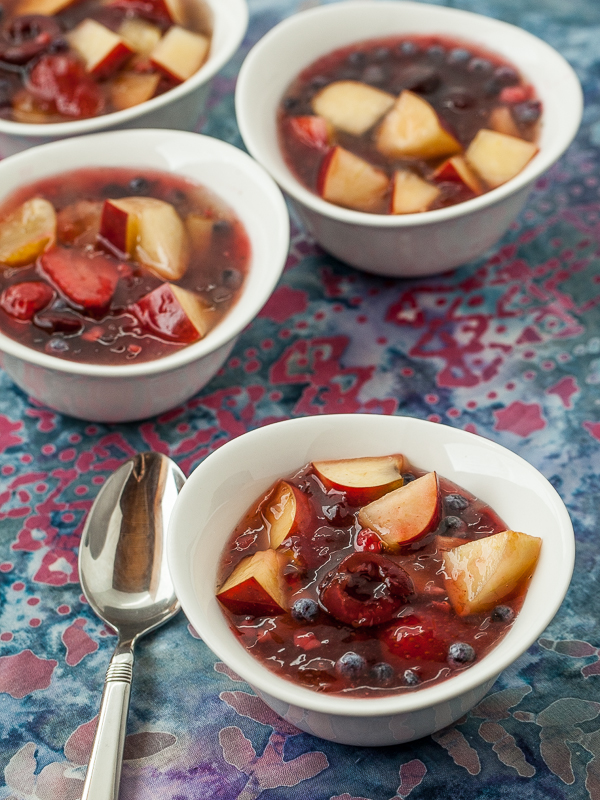
- 1 handful Irish moss
- 1 sprig mint or mint tea bag
- 1/2 cup apple juice
- 1 lemon juiced
- 1 apple
- 1 pear
- 1 cup mixed berries
- Maple syrup or honey to taste
- Take a handful of the moss and soak it in cold water in a large pot. After a few minutes begin to rub the moss with your fingers to remove any snails (the size of sand grains) and tiny “shrimp” that float to the surface. Rinse several times in a strainer and soak again in new water just to cover the moss for half an hour.
- Add a sprig of mint or a mint teabag and bring to a boil. Turn down to simmer and cook for half an hour, stirring occasionally. It will foam up a lot, so use a DEEP pot! Allow to cool slightly and pour into a strainer over a large bowl. Let drain and scrape the thick sauce off the bottom of the strainer with a rubber spatula. Discard the remaining moss.
- To this juice add 1⁄2 cup apple juice and some maple syrup or honey to taste. Pour into a smaller bowl and add cut up fruit: apple, pear, blueberries and raspberries. Cover and chill overnight or until set.
- You can also make a dessert gel with cooked fruit. While you make the gel, stew fruit together in a separate sauce pan (apples are always a good choice), and add cinnamon, vanilla, chopped nuts, and sweetener to taste. Brighten it with lemon zest or orange zest or lemon juice if you like. Combine with the gel, and let it all cool. Chill overnight, or until set. Serve with whipped cream.
Soups
Peaceful Soup

- Heat water (3-4 quarts).
- Add Seaweed Soup Mix (a teaspoon per serving) (to make nutrients-dense broth),
- Wash grain (three times), swirl and strain, (half a cup whole oats, rice or barley).
- Add grain, shiitake mushrooms, ginger root.
- Cut root vegetables (carrots, parsnips, rutabaga)
- Dice an onion and some garlic, sauté with thyme. (Choose your favorite oil: sesame, olive, coconut.)
- When grain is softened, add root vegetables, tamari.
- Finish off with a generous amount of greens: Kale, parsley, celery. Add the onions.
- If you have fresh herbs, now is the time!
- This soup gets better on the second day And you can add pasta sauce, noodles And cut corn, totally renewing its flavors. Enjoy!
Curried Red Lentil Soup

- 2 cups red lentils
- 2 tbsp coconut oil
- 1 onion chopped
- 4 cloves garlic minced
- 4 or 5 carrots sliced in half-moons
- 3 stalks celery sliced
- 5 kale leaves ribs removed and chopped 1 bell pepper, cut into small
- 1/4 cup Seaweed Soup Mix
- 1 tsp ground cumin
- 1 tsp curry powder
- 1 tsp black pepper
- 10 cups water
- 1 tsp sea salt
- In a large soup pot, sauté onions and garlic in oil. Add carrots, celery and peppers. Sauté for 5 minutes.
- Add Seaweed Soup Mix, red lentils, salt and spices. Slowly stir in water. Bring to a boil, then lower heat and let simmer partly covered until lentils are cooked, stirring occasionally. Stir in chopped kale and cook for 5 more minutes until kale is tender, but still bright green. Taste for salt. Enjoy!
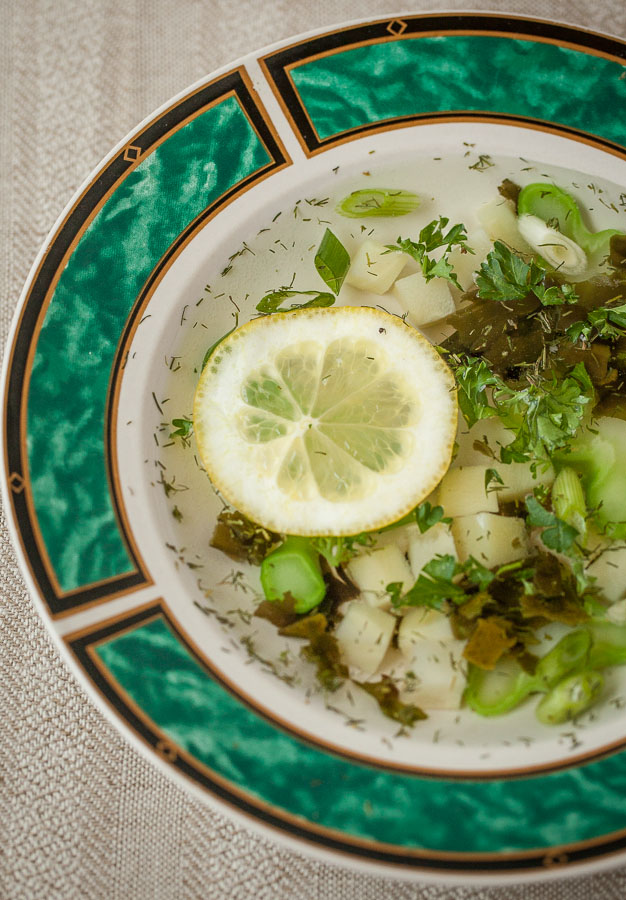
Lemon-Dill Clear Soup
- CourseSoups
| Servings |
| 4 |
|
|
|
|
This clear soup is a very fast, very light soup especially good for someone recovering from an illness. As a first course, it leaves plenty of room for the main dishes. Adding a light soup to each meal is an excellent way to add fluids to the diet. This practice also helps to maintain proper weight, by tempering the appetite somewhat. This soup can also be made with alaria rather than soup mix. Just snip a few strips of dried alaria with scissors into the soup pot and proceed as written below.
|
- 1 tbsp Seaweed Soup Mix
- 4 cups water
- 1/2 cup broccoli stems and florets sliced horizontally
- 1 cup parsnips diced into small cubes
- dash sea salt
- juice of 1/2 lemon
- 4 thin slices of lemon
- chopped dill to taste
- 4 small sprigs of dill for garnish
- Place Seaweed Soup Mix and the water in a medium soup pot and bring to a boil. Reduce heat, cover pot and simmer for 20 minutes.
- Add broccoli, parsnips and salt. Simmer just a few minutes until the parsnips are cooked and the broccoli is still bright green. Add dill and simmer 1 minute more.
- Add lemon juice and taste for salt. Place soup in individual serving bowls, being sure to include several broccoli pieces and parsnips cubes in each dish. Garnish with a sprig of dill and lemon slice.
Miso Dumpling Soup

- CourseSoups
| Servings |
| 4-6 |
|
|
|
|
This soup recipe was designed for us by a high school cooking class. It is a vegetarian version of traditional Wonton Soup..which is usually made with a meat-based broth and pork-filled wontons. This one is vegan and just as good as the traditional soup! To your health!
|
- 8 oz firm tofu pressed for 10 minutes to remove excess water
- 8 oz fresh bean sprouts
- 1 cup napa cabbage finely chopped
- 3 scallions finely chopped
- 1 tbsp sesame seeds lightly toasted and crushed
- 3 cloves garlic minced
- Pinch sea salt
- 3 in piece of ginger peeled and grated
- 20 wonton pastry wrappers, thawed (egg and preservative-free varieties are available frozen)
- 6 in strip digitata
- 6 cups warm water
- 6 dried shiitake mushrooms whole, with stems
- 8 oz firm tofu cut into small cubes
- 6 tsp barley miso
- 6 scallions thinly sliced
- Bring a large pot of water to a boil and blanch bean sprouts, then cabbage. Cool both in cold water and drain well. Chop very fine and set aside.
- Crumble tofu and combine with bean sprouts, cabbage, and all the remaining ingredients. Mix well with hands. Taste for salt and add more if needed.
- Working on a flat surface, lay out a few wonton wrappers. (Keep remaining wrappers covered.) Fill a small bowl partially with cold water and set aside. Place a heaping teaspoon of the tofu mixture in the center of each wonton wrapper. Dip finger in cold water and wet the outer edges of the wonton wrapper. Bring 2 opposite corners of the wrapper together to form a triangle and enclose the filling. Press edges firmly around the mound of filling to eliminate any air pockets and seal. Moisten opposite corners of the long side. Curl moistened corners toward each other, overlapping one on top of the other, and press the corners together to seal. Assemble all the wontons in this manner and set aside. Cover with a damp paper towel to prevent dumplings from drying out.
- Place warm water in large soup pot with digitata and shiitake mushrooms. Let soak for 1/2 hour. Remove digitata and slice into 1/2 inch squares. Slice shiitake, discarding stems. Return all to the pot of water. Bring to a boil and simmer 20 minutes, covered. While broth is cooking, assemble the wontons.
- When the broth is ready, carefully add the tofu cubes and wontons. In a small bowl, combine a few spoonfuls of broth with the miso and stir until it dissolves. Very gently simmer wontons for 5 minutes until wrapper turns translucent. Taste for salt. Stir wontons gently while they are cooking. Return miso mixture to pot. Simmer gently for 1 minute.
- Add scallions and serve immediately.
- For variety, add 1 cup of sliced bok choi and 1 cup snow peas to the broth instead of the soft tofu. Simmer with the wontons for 5 minutes.
Ocean Delight
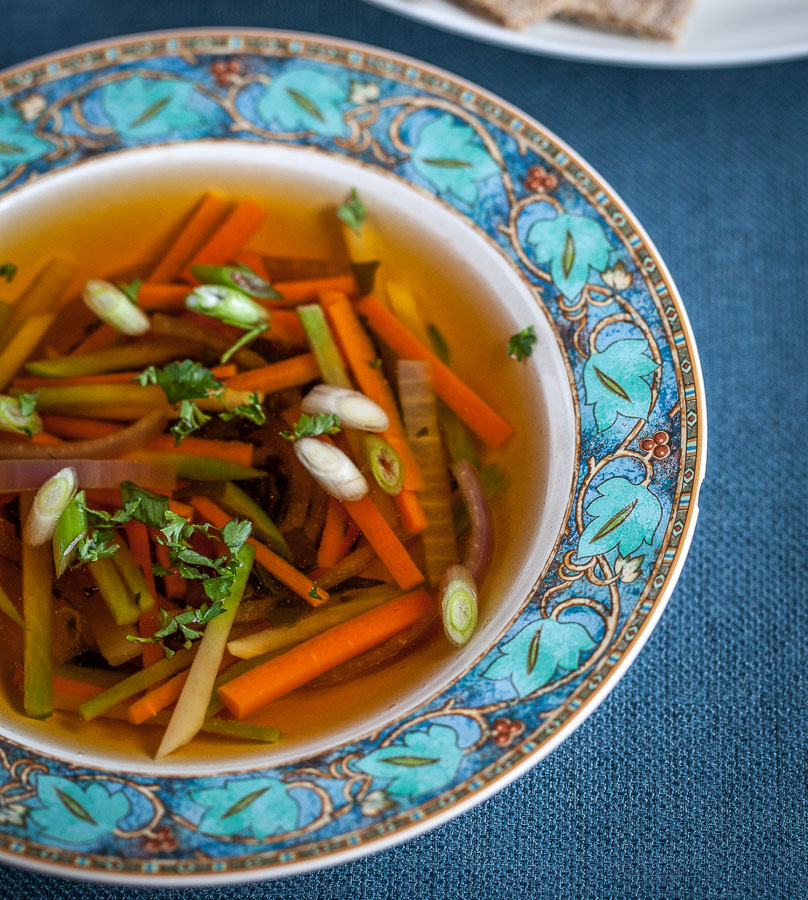
- 1/2 tsp light sesame oil
- 1 onion cut lengthwise into thin slices
- 1 carrot cut into thin matchsticks
- 1 cup daikon cut into thin matchsticks
- 1/4 cup Seaweed Soup Mix
- 4-5 cups water
- Tamari to taste
- a few drops of toasted sesame oil
- scallions thinly sliced, for garnish
- Heat oil in soup pot over med-low heat. Add onion and sauté, stirring occasionally until coated with oil.
- Add water, soup mix, carrots and daikon. Bring to a boil. Reduce heat, cover and simmer 20 minutes. Season very lightly with tamari and a few drops sesame oil. Simmer 10 minutes more. Serve garnished with scallion slices.
Old Fashioned Vegetable Soup
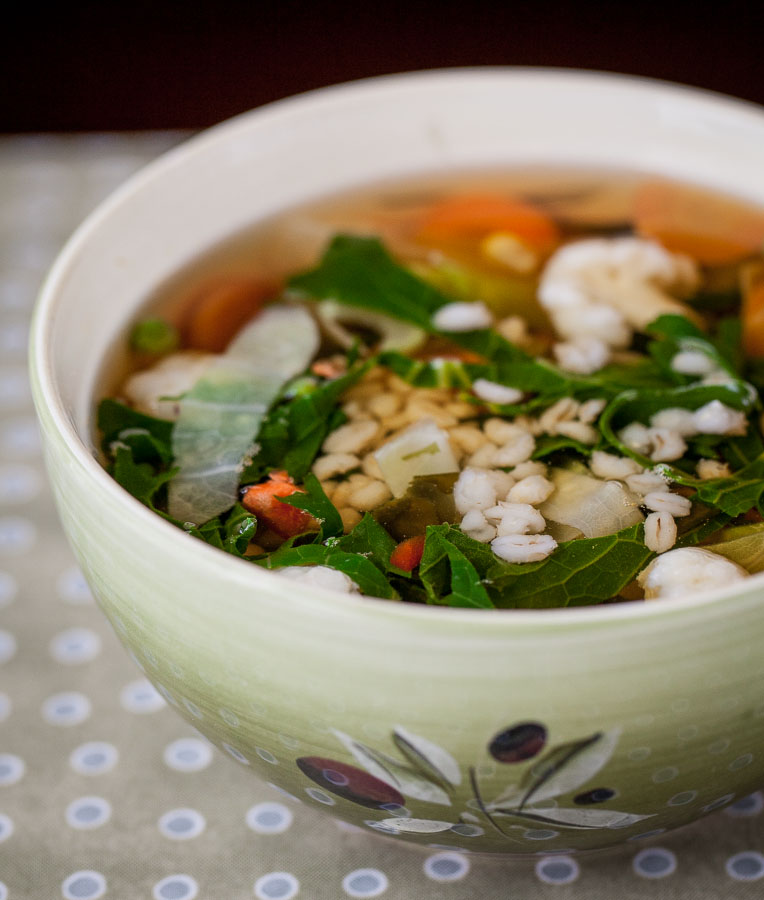
- 1/2 cup barley washed
- 8-10 cups water
- 1/4 cup Seaweed Soup Mix
- 2 tsp sesame oil
- 2 cups onion diced
- 2 ribs celery with leaves chopped
- 1/2 small cauliflower chopped
- 1/2-1 cup corn kernels fresh or (frozen*)
- 1/2-1 cup peas fresh or (frozen*)
- 2 cups cabbage shredded
- 1 large carrot sliced in thin rounds
- 1/2 tsp sea salt
- 1/8 tsp thyme
- 1/8 tsp marjoram
- 3 cups kale or collards shredded
- 1/4 cup tamari
- In a soup pot combine barley, soup mix, water and salt. Bring to boil, cover and simmer 30 minutes.
- Heat sesame oil in a large skillet. Sauté in order: onion, celery, cauliflower, cabbage and carrot. Add to soup pot with fresh corn & peas, salt and herbs. Simmer 30 minutes more.
- Add kale or collards (*add peas and corn here if using frozen vegetables) and tamari. Simmer 5 minutes or until greens are tender but still bright and colorful.
Split Pea Soup with Spring Greens

- 1 tbsp Seaweed Soup Mix
- 5 cups spring or filtered water
- 1/2 cup green or yellow split peas rinsed
- 1/2 medium onion diced
- 1/2 cup carrots sliced in half-moons
- 1/4 cup daikon diced small
- 1/4 cup celery diced small
- 1/4 cup daikon greens chopped fine (optional)
- 1 stalk bok choi separate white from leaf, slice white, chop leaf fine
- 1 stalk kale separate stalk from leaf, slice stalk thin, chop leaf fine
- 1 tbsp white miso
- chopped parsley or sliced scallions for garnish
- In a large soup pot, combine the 5 cups water, seaweed soup mix, split peas, and diced onion. Bring to a boil, reduce heat and simmer partially covered for 30 minutes while you prepare the other vegetables.
- Add carrot, daikon and celery to the soup, return to a simmer and cook partially covered for another 15-20 minutes. Check peas for softness and cook longer if necessary until they can be mashed easily with a spoon against the side of the pot. If the soup seems too thick at this point, add a little boiling water until the consistency pleases you.
- Stir in bok choi whites and kale stalks and simmer 2-3 minutes.
- Remove a small amount of broth and dissolve miso into it. Stir miso mixture into soup and add greens. Simmer 3-4 minutes. The greens should still be a nice bright color.
- Serve garnished with chopped parsley or sliced scallions.
Spring Soup
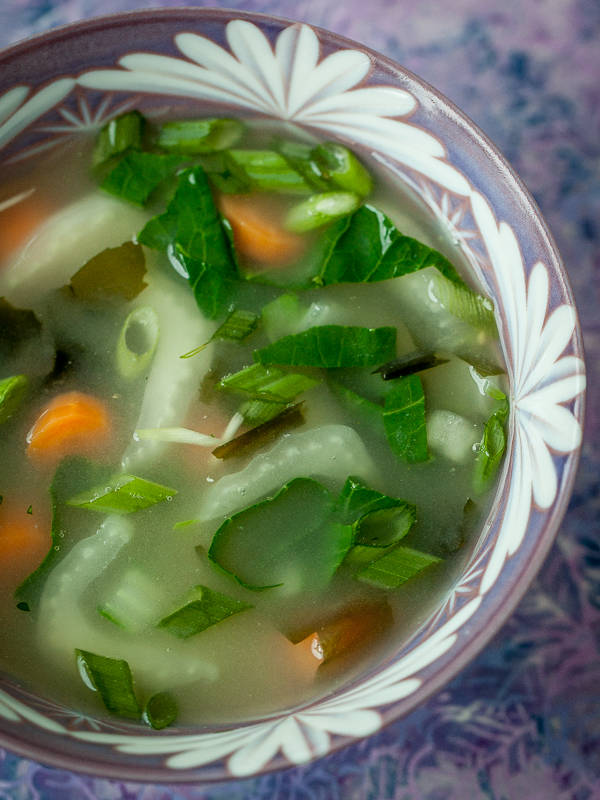
- 1 bunch scallions with roots washed very well
- 3 leaves bok choi or 3 baby bok choi
- 1 small carrot with top (if available)
- 1 tsp olive oil
- 2 tbsp ginger grated
- 6 cups water
- 1 tbsp Summer Blend Seaweed Soup Mix
- 2 tbsp white miso
- Remove scallion roots and mince, set aside. Thinly slice scallions on the diagonal, keeping white, greens and tops separate.
- Slice bok choi, keeping whites and greens separate. Slice carrots into thin half rounds. Finely chop carrot top, if available.
- Heat oil in a medium soup pot. Sauté carrots and scallion roots 1-2 minutes. Add scallion and bok choi whites and sauté briefly. Add scallion greens and ginger, sauté another minute.
- Add water and seaweed soup mix. Bring to boil. Reduce heat and simmer uncovered for 20 minutes. Add scallion tops, bok choi greens, carrot tops. In a small bowl, blend the miso with a small amount of the broth. Return the miso mixture to the pot. Simmer without boiling for 5 more minutes.
Summer Soup
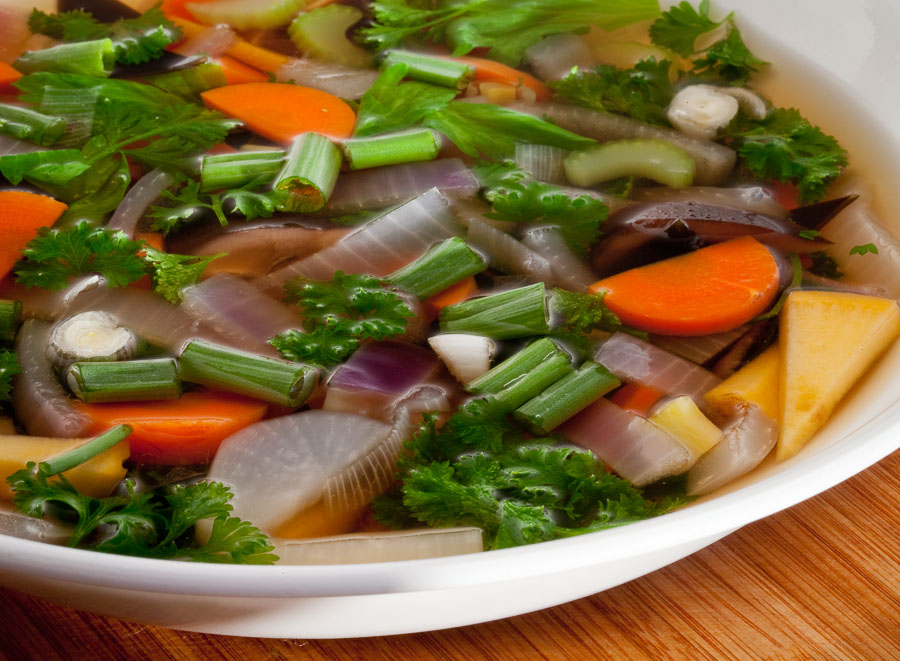
- 6 cups water
- 1/4 cup Seaweed Soup Mix
- 3 dried shiitake mushrooms
- 1/2 tsp light sesame oil
- 1 onion cut lengthwise into slices
- a fat pinch of thyme
- 1 carrot cut into rounds
- 1 small rutabaga cut into wedges
- 1 small daikon cut into half rounds
- 1 stalk celery 1/4" slices
- 1 cup parsley chopped
- dash of shoyu
- In a medium soup pot or dutch oven, combine water with the shiitake mushrooms and seaweed soup mix. Bring to a boil and simmer, partially covered while you prepare the vegetables.
- Prepare the vegetables and set each one aside in a small bowl as you cut it. Heat oil in large frying pan over medium- low heat. Sauté the onion with the thyme until translucent (about 5 minutes).
- Add root vegetables to onion/thyme mixture and sauté another 5 minutes, stirring occasionally.
- Remove the shiitake mushrooms from the simmering seaweed stock with a slotted spoon and slice on a cutting board. Discard stems. Carefully pour vegetables into the pot of soup. Season very lightly with shoyu and simmer 10 minutes more. Serve garnished with parsley and scallions.
- Variation: add cut corn and sweet red bell pepper. Add a light sweet summer chickpea miso at the end.
Umami Soup
- CourseSoups
|
|
|
|
|
Umami is the fifth taste, after sweet, salty, sour and bitter.
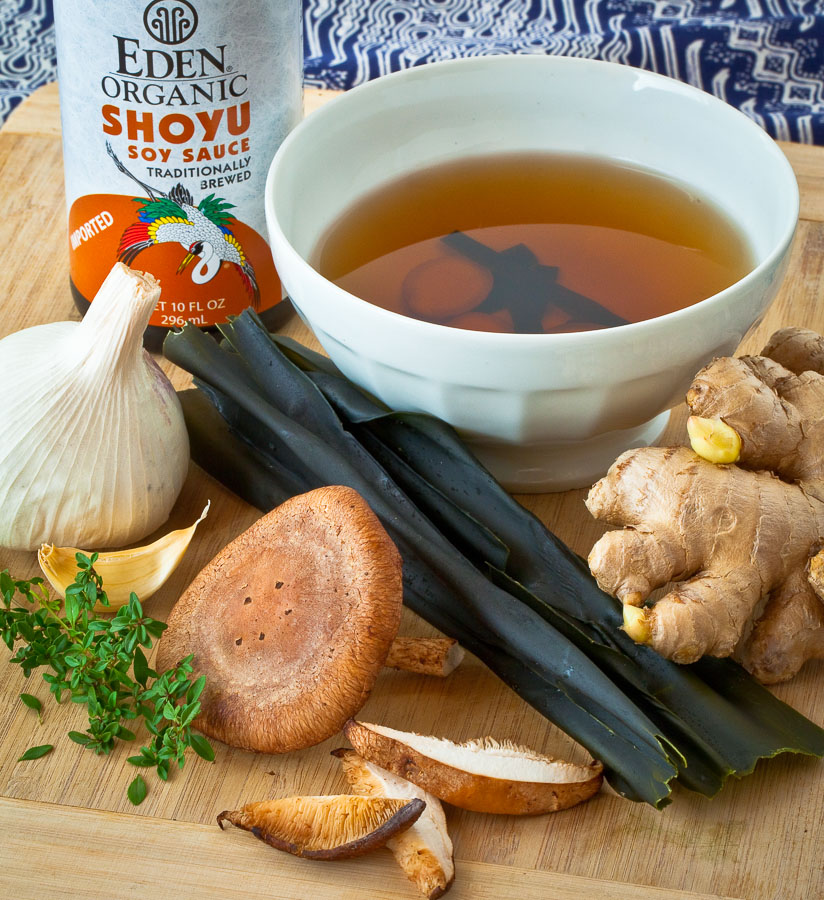
Both the tongue and the stomach have receptors for the taste which can be described as savory or meaty. The umami receptors signal the body to start digesting foods, especially proteins. Umami is an underlying taste that makes everything else in this soup taste more delicious and appetizing. When you make this soup, make a lot, because you are going to have a good appetite! This soup doesn’t use meat or Japanese fish flakes for its basic stock. Instead it relies on plant-based ingredients that are umami-rich: digitata kelp, shiitake mushrooms, and tamari. We use this soup year-round and vary the ingredients according to what is available from our garden and cupboards.
|
- 3 quarts water in a large soup pot
- 1/4 cup Seaweed Soup Mix
- 2 slices ginger root
- 1 bay leaf
- 3 dried shiitake mushrooms
- 1 tsp sea salt
- 1 tbsp light sesame oil or coconut oil
- 3 cloves garlic peeled and minced
- 1 medium onion sliced
- 1-2 tsp thyme
- 1 stalk celery sliced
- 2 cups root vegetables cut into 1/2" pieces
- 2 cups other vegetables of your choice sliced (Spring alternative: peas, string beans and zucchini) (Summer soup alternative: delicata squash and sweet corn)
- 1 can (14.5 oz) stewed tomatoes or 3 fresh tomatoes chopped
- 3 oz noodles (soba, udon or rice) broken into 2 inch pieces
- handful of parsley or kale
- Dash tamari
- Dash cayenne
- Garnish: parsley, chives or other fresh herbs
- In a large soup pot, combine water, Seaweed Soup Mix, ginger, shiitakes, and bay leaf. Bring to a boil, partially cover and reduce heat to a simmer. Allow to cook while you prepare the vegetables.
- Remove shiitakes when softened , cut off and discard the stem. Slice the caps and return to soup pot. Add cut up root vegetables and salt. (If you decide to use beets, use a very small amount, or choose golden beets to preserve the color of the other ingredients.) Continue to simmer until tender, about 20 minutes.
- In a small frying pan, sauté onion, garlic and celery with liberal sprinkles of thyme. When the onion slices are golden, stir them into the simmering soup.
- Add the other vegetables you have chosen, such as squash, corn or green beans. Pour in the stewed or fresh tomatoes and stir. Season with tamari, black pepper and a dash of cayenne. Simmer until the vegetables are just tender.
- In a separate pot, cook noodles according to package directions, drain and set aside.
- When you are ready to serve the soup, add the greens and parsley and allow to cook only 5 minutes so they stay bright green. Add the cooked noodles and stir gently.
- Serve up the soup with a topping of fresh parsley and/or chopped chives. When you reheat this soup on the second day, add more parsley to get the bright green color back.
Sea Gypsy Soup

- CourseSoups
| Servings |
| 6-8 |
|
|
|
|
This is a late fall soup that’s been warming us up. Outside there’s a bit of snow on the ground, daylight is short, and we spend more time in the kitchen, slow cooking our food. This soup has the warm colors of orange vegetables, flecked with green vegetables. Make a big pot, and I’ll show you some ways that you can brighten its flavor on the second day.
|
- 5 cups water
- 1/4 cup Seaweed Soup Mix
- 1/4 cup brown rice, uncooked rinsed
- 3-4 tbsp unrefined coconut oil
- 2 cups onion chopped
- 3 cloves garlic minced
- 2 cups sweet potatoes or winter squash peeled and cubed
- 1/2 cup celery chopped
- 1/2 cup carrots cut in rounds
- 1 cup fresh tomatoes peeled, seeded and chopped (or 1 12 oz canned diced tomatoes)
- 1/2 cup red or yellow sweet peppers chopped
- 1/2 cup green beans cut in 1" pieces, or peas (these can be frozen)
- 1 1/2 cups cooked chickpeas (one 15 oz can, rinsed and drained) or 3/4 cup dry chickpeas cooked earlier in the day and drained
- 2 bay leaves
- 2 tsp sweet Hungarian paprika
- 1/2 tsp turmeric or 2 Tbsp grated fresh turmeric
- 1 tsp dried basil (or 1 tbsp fresh basil) chopped
- 1 tsp sea salt and more to taste
- black pepper to taste
- Dash cinnamon
- Dash cayenne
- 1/2 cup fresh parsley minced
- 1 tbsp tamari
- In a medium saucepan combine water with the rice and soup mix and bring to a boil. Reduce heat to a simmer and partially cover pot. Allow to simmer while you prepare the vegetables.
- In a large soup pot, sauté the onions and garlic in oil until they are translucent. Combine cubed sweet potatoes or squash with onion mixture and stir. Add all the spices, except for the tamari and parsley, and pour in the hot seaweed/rice mixture.
- Simmer, covered for 20 minutes on low heat until the sweet potatoes or squash cubes are tender. Remove bay leaves and roughly mash with a potato masher, leaving some tasty chunks.
- Stir in celery, carrots, tomatoes, peppers, green beans (or peas) and cooked chickpeas. Cover and simmer another 10 minutes until the vegetables are just tender and still brightly colored.
- Add parsley and tamari. Taste for seasoning.